
Flower Quality Guide
Indoor vs Greenhouse vs Outdoor Cannabis: Which Growing Method Produces the Best Flower Quality?

Jul
Indoor vs Greenhouse vs Outdoor Cannabis is one of the most common questions among cannabis consumers in Canada. While many people assume one growing method always produces better flower, the reality is far more nuanced.
For years, consumers and growers have debated whether indoor, greenhouse, or outdoor cultivation produces the highest-quality cannabis flower. In practice, even when the same cultivar is grown, differences in the growing environment can influence everything from yield and appearance to aroma, consistency, and production costs.
In this guide, you’ll learn how the three main cannabis growing methods compare and how each one influences the final quality of the flower. Rather than trying to identify a single “best” option, we’ll explore the strengths and trade-offs of each approach so you can make a more informed choice based on what matters most to you.
Why Growing Method Matters More Than Most Consumers Realize
A cannabis plant’s growing environment doesn’t determine quality on its own, but it has a significant influence on how that quality is expressed. Light, temperature, humidity, airflow, and cultivation practices all affect how a plant develops throughout its life cycle, shaping the appearance, aroma, resin production, and overall character of the finished flower.
Some of the key factors influenced by the growing environment include:
- Light exposure
- Temperature
- Humidity
- Nutrient uptake
- Plant stress
- Resin production
- Terpene development
- Bud density
Indoor cultivation offers growers the highest level of environmental control. Because lighting, temperature, humidity, and irrigation can be carefully managed, growers are able to produce more consistent harvests throughout the year. The same cultivar is more likely to deliver a similar appearance, aroma, and cannabinoid profile from one harvest to the next.
This consistency is one of the reasons indoor-grown flower is often associated with premium-quality cannabis. Indoor buds are typically dense, well-trimmed, and visually appealing, with uniform trichome coverage that contributes to strong bag appeal. Controlled growing conditions may also help growers achieve consistently high cannabinoid levels, although THC content ultimately depends on genetics, cultivation practices, harvest timing, and post-harvest processing.
Unlike outdoor cultivation, which is generally limited to a single seasonal harvest in Ontario, indoor facilities can produce multiple harvests throughout the year. That consistency, combined with higher operating costs for lighting, climate control, and labour, is one of the reasons indoor cannabis is often positioned in the premium segment of the legal market.
Indoor vs Greenhouse vs Outdoor Cannabis: Understanding the Three Main Growing Methods
Since cannabis was legalized at the federal level in 2018, licensed producers across Canada have adopted a variety of cultivation methods to meet different production goals. Today, commercial cannabis is grown indoors, in greenhouses, and outdoors, with each approach offering its own advantages, challenges, and influence on the characteristics of the final flower.
Indoor Cannabis

Indoor cultivation has become a cornerstone of Canada’s legal cannabis industry, particularly for growers focused on producing consistent, premium cannabis flower. By growing cannabis inside a controlled facility, cultivators can carefully manage lighting schedules, temperature, humidity, airflow, irrigation, and other environmental conditions throughout every stage of the plant’s life cycle.
This level of control allows growers to produce reliable harvests throughout the year rather than relying on seasonal weather. The same cultivar can deliver a more consistent appearance, aroma, and cannabinoid profile from one harvest to the next, making indoor cultivation especially attractive for brands that prioritise product consistency.
From a consumer’s perspective, indoor-grown flower is often recognised for its dense bud structure, careful trimming, strong bag appeal, and consistent resin development. These characteristics have made indoor cannabis closely associated with the premium segment of Canada’s legal market. However, it’s important to remember that the growing method alone doesn’t determine quality. Exceptional flower is the result of careful cultivation and post-harvest handling—not environmental control alone.
Key Advantages
- Environmental control
- Consistency
- Multiple harvests
- Premium bag appeal
Advantages of Indoor Cultivation
- Precise control over lighting, temperature, humidity, and airflow.
- Multiple harvests throughout the year.
- Consistent flower quality between harvests.
- Excellent visual appeal and uniform bud development.
- Better protection from unpredictable weather and many outdoor pests.
Considerations
Indoor cultivation also comes with higher operating costs. Artificial lighting, HVAC systems, ventilation, irrigation, and facility maintenance require significant energy and investment. As a result, indoor-grown cannabis is often positioned at a higher price point than greenhouse or outdoor flower. Energy consumption is also typically greater, making sustainability an important consideration for producers looking to reduce their environmental footprint.
Greenhouse Cannabis
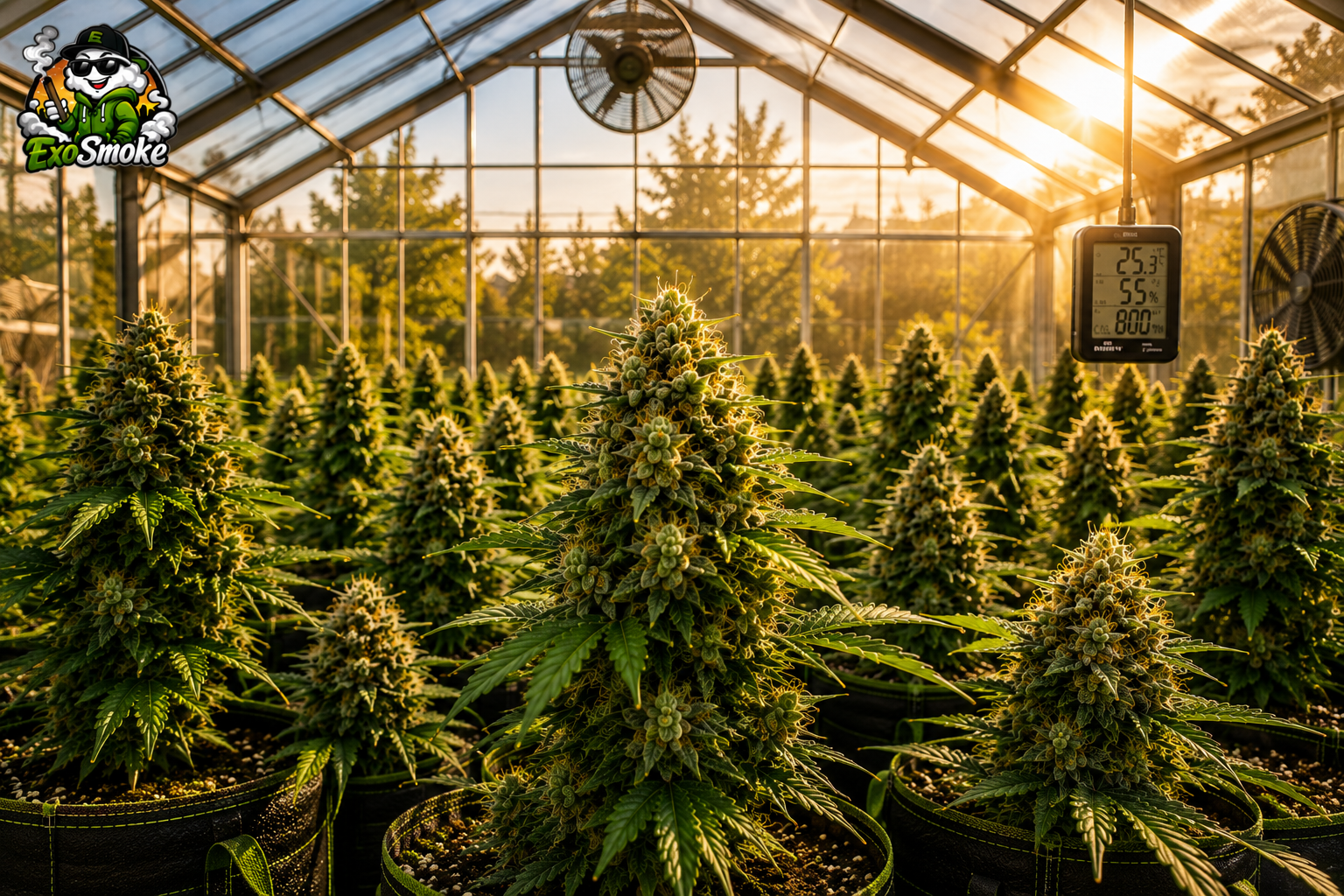
Greenhouse cultivation combines many of the advantages of indoor and outdoor growing. By using natural sunlight while providing growers with greater control over temperature, humidity, irrigation, and airflow, greenhouses offer a practical balance between flower quality, production efficiency, and sustainability.
Over the past several years, greenhouse cultivation has become an increasingly important part of Canada’s legal cannabis industry. Many licensed producers use modern greenhouse facilities to take advantage of natural light while maintaining a more predictable growing environment than traditional outdoor cultivation.
One of the biggest advantages of greenhouse growing is energy efficiency. Because sunlight provides the primary light source, greenhouse operations generally consume far less electricity than fully indoor facilities. At the same time, the enclosed structure helps protect plants from heavy rain, frost, and other environmental conditions that can affect outdoor crops. This combination often allows growers to produce more consistent flower while supporting multiple harvests throughout the growing season in suitable climates.
From a consumer’s perspective, greenhouse-grown cannabis often strikes a balance between quality and value. Flowers typically develop strong resin production, healthy terpene expression, and good visual appeal while remaining more affordable than many premium indoor products.
Advantages of Greenhouse Cultivation
- Uses natural sunlight to reduce energy consumption.
- Offers greater environmental control than outdoor cultivation.
- Produces more consistent flower than traditional outdoor growing.
- Supports strong terpene development and resin production.
- Often provides an excellent balance between quality and price.
Considerations
Building and operating a commercial greenhouse still requires a significant investment. While operating costs are generally lower than indoor cultivation, greenhouse facilities depend more heavily on seasonal daylight and local weather conditions. They may also face greater exposure to pests and environmental fluctuations than fully enclosed indoor operations, requiring careful monitoring and integrated pest management throughout the growing cycle.
At a Glance
| Greenhouse Cannabis | |
| Growing Environment | Semi-controlled greenhouse |
| Light Source | Natural sunlight with supplemental lighting when needed |
| Harvest Cycle | Seasonal with the potential for multiple harvests, depending on the facility |
| Consistency | High |
| Visual Appeal | Very good |
| Operating Costs | Moderate |
| Sustainability | Lower energy use than indoor cultivation |
Outdoor Cannabis

Outdoor cultivation is the oldest and most traditional method of growing cannabis. Despite the rapid growth of indoor and greenhouse production, outdoor cultivation remains an important part of Canada’s legal cannabis industry, particularly in regions with favourable growing conditions such as Southern Ontario and parts of British Columbia.
Unlike indoor facilities, outdoor growers rely on natural sunlight and seasonal weather to support the plant’s growth. The growing season generally begins after the final spring frost and ends before the first frost of autumn, making harvests largely seasonal. As a result, outdoor cannabis reflects the natural conditions in which it was grown, with each harvest shaped by that year’s climate.
One of outdoor cultivation’s greatest advantages is access to full-spectrum sunlight. Natural light includes wavelengths that artificial lighting may not fully replicate, and many growers believe this contributes to expressive terpene development and distinctive flavour profiles. While research continues to explore these relationships, genetics, harvest timing, drying, and curing remain equally important in determining the final quality of the flower.
Outdoor cultivation is also the most energy-efficient growing method. Without the need for artificial lighting or intensive climate control, it has a significantly smaller environmental footprint than indoor production, making it an attractive option for producers focused on sustainability.
At the same time, outdoor growing presents unique challenges. Weather conditions, temperature fluctuations, heavy rainfall, and pest pressure can all affect crop quality and consistency. Because cultivation follows a seasonal cycle, growers typically harvest once each year, and the appearance of outdoor flower may be less uniform than carefully manicured indoor cannabis.
From a consumer’s perspective, outdoor-grown flower often offers excellent value. Many people appreciate its natural character and distinctive aroma, while others look forward to the arrival of each new harvest in the autumn.
Advantages of Outdoor Cultivation
- Uses natural sunlight throughout the growing cycle.
- Lowest energy consumption and environmental impact.
- Often offers excellent value for consumers.
- Many growers appreciate its expressive terpene profile and natural character.
- Supports large-scale cultivation in suitable climates.
Considerations
Outdoor cultivation depends heavily on local weather and seasonal conditions. Changes in temperature, humidity, rainfall, or pest activity can influence both yield and flower quality. Harvests are typically limited to one season each year, and visual consistency may vary more than indoor or greenhouse-grown cannabis.
At a Glance
| Outdoor Cannabis | |
| Growing Environment | Open-air cultivation |
| Light Source | Natural sunlight |
| Harvest Cycle | Seasonal (typically one harvest per year in Canada) |
| Consistency | Weather-dependent |
| Visual Appeal | Naturally variable |
| Operating Costs | Lowest |
| Sustainability | Lowest energy use and carbon footprint |
Indoor vs Greenhouse vs Outdoor: A Side-by-Side Comparison
Each cultivation method offers its own strengths, trade-offs, and growing conditions. Rather than asking which one is objectively “better,” the comparison below highlights how indoor, greenhouse, and outdoor cannabis typically differ in terms of cultivation, consistency, cost, and overall flower quality.
This overview is intended as a general guide. Individual results can vary depending on the cultivar, cultivation practices, harvest timing, and post-harvest processing.
| Factor | 🌿 Indoor | 🌞 Greenhouse | 🌲 Outdoor |
| Light Source | Full-spectrum LED/HPS | Natural sunlight + supplemental lighting | Natural sunlight |
| Growing Season (Ontario) | Primarily Spring–Fall (may vary by facility) | Spring–Fall | June–October |
| Temperature Control | Excellent | Moderate | Weather dependent |
| Humidity Control | Excellent | Partial | None |
| Airflow | Controlled ventilation | Natural + fans | Natural airflow |
| Rain Exposure | None | Protected | Direct exposure |
| Frost Risk | None | Very low | Seasonal risk |
| Bud Density | ★★★★★ | ★★★★☆ | ★★★☆☆ |
| Terpene Expression | Very Good–Excellent | Excellent | Excellent |
| THC Consistency | Very consistent | Consistent | Can vary |
| Yield Stability | High | High | Weather dependent |
| Production Cost | Highest | Moderate | Lowest |
| Environmental Impact | Highest energy use | Moderate | Lowest |
| Typical Quality | Often Premium / Craft | Premium to Mid-Premium | Value to Premium* |
| Price Range | Usually highest | Mid-range | Often most affordable |
*Depends on genetics and cultivation practices
Note: These comparisons reflect general industry trends. Actual flower quality varies from one cultivar and producer to another.
How Each Growing Method Affects Flower Quality
Growing conditions don’t change a plant’s genetics, but they do influence how those genetics are expressed. Factors such as light intensity, temperature, humidity, airflow, and cultivation practices all shape the appearance, aroma, resin production, and overall quality of the finished flower.
Instead of asking which cultivation method is “best,” it’s more useful to understand how each environment encourages different characteristics. Indoor, greenhouse, and outdoor cannabis can all produce exceptional flower when the genetics and post-harvest process are equally well managed.
Bud Structure
Bud structure is one of the easiest characteristics to notice when comparing flowers grown in different environments. While genetics play an important role, environmental conditions influence how tightly buds develop during the flowering stage.
| Growing Method | Typical Bud Structure |
| Indoor | Dense, compact, and highly uniform |
| Greenhouse | Moderately dense with slight natural variation |
| Outdoor | Often larger and more open, depending on cultivar and seasonal conditions |
Indoor-grown cannabis is commonly recognised for its compact, well-formed buds because growers can maintain consistent lighting, temperature, and humidity throughout the flowering cycle. This stable environment encourages even flower development and contributes to the polished appearance many consumers associate with premium cannabis.
Greenhouse-grown flower typically falls somewhere in the middle. Natural sunlight encourages vigorous growth, while environmental controls help maintain good bud density and consistency.
Outdoor cannabis often develops a more open structure as plants respond to wind, changing temperatures, and natural sunlight. That doesn’t necessarily indicate lower quality. Many experienced growers intentionally produce outdoor flower with excellent terpene expression, healthy trichome coverage, and strong overall performance.
Ultimately, bud density is only one aspect of flower quality. A slightly airier flower can still provide an outstanding experience when it’s grown, harvested, and cured with care.
Trichome Coverage & Resin Production
Trichomes are the tiny, crystal-like resin glands that produce cannabinoids and terpenes, making them one of the clearest indicators of flower quality.
| Growing Method | Typical Trichome Characteristics |
| Indoor | Consistent trichome coverage thanks to stable growing conditions. |
| Greenhouse | Strong resin development, combining natural sunlight with partial environmental control. |
| Outdoor | Healthy trichome production under favourable conditions, although weather can affect resin preservation before harvest. |
Indoor cultivation often produces a more uniform layer of trichomes across the flower, while greenhouse and outdoor cannabis can also develop excellent resin when grown and harvested under favourable conditions. Ultimately, genetics and harvest timing have a greater influence on trichome quality than the growing method itself.
Aroma & Terpene Profile
While appearance often catches the eye first, aroma is usually one of the best indicators of a flower’s overall quality. A rich terpene profile reflects not only the plant’s genetics but also how well it was grown, harvested, dried, and cured.
| Growing Method | Typical Aroma & Terpene Characteristics |
| Indoor | Clean, consistent aroma with reliable terpene expression. |
| Greenhouse | Rich terpene profile supported by natural sunlight and a controlled environment. |
| Outdoor | Distinctive, seasonally influenced aroma that can vary with weather and growing conditions. |
There is no single cultivation method that consistently produces the “best” terpene profile. Well-grown indoor, greenhouse, and outdoor cannabis can all deliver exceptional aroma when genetics and post-harvest handling are carefully managed.
Colour & Appearance
Colour and appearance can offer useful clues about a flower’s genetics, maturity, and post-harvest handling, but they shouldn’t be used as the only measure of quality.
A healthy cannabis flower may range from bright green to deep forest green, while some cultivars naturally develop purple hues, especially when cooler nighttime temperatures occur late in the flowering stage. Mature pistils typically change from white to shades of orange, amber, or reddish-brown as the flower develops.
Good bag appeal is usually the result of several characteristics working together, including healthy colour, visible trichomes, careful trimming, and proper drying and curing. While indoor cannabis is often known for its polished appearance, well-grown greenhouse and outdoor flower can be equally impressive.
Does Indoor Cannabis Always Have Higher THC?
When comparing indoor vs greenhouse vs outdoor cannabis, indoor-grown cannabis is often associated with dense buds, strong visual appeal, and consistently high cannabinoid levels because growers can carefully manage light, temperature, humidity, and other environmental conditions. However, indoor cultivation doesn’t automatically produce higher THC than greenhouse or outdoor cannabis.
The final cannabinoid content depends on much more than where the plant is grown. Genetics play the biggest role, while cultivation practices, harvest timing, drying, curing, and proper storage all influence the quality of the finished flower. Even an indoor crop can fall short if it’s harvested too early or cured improperly, while a well-grown greenhouse or outdoor flower may achieve comparable potency and an excellent terpene profile.
Ultimately, the growing method is only one part of the equation. From cultivation to post-harvest handling, every stage contributes to the overall quality of the cannabis flower.
Which Type of Cannabis May Suit Your Preferences?
Choosing between indoor, greenhouse, and outdoor cannabis ultimately comes down to your priorities. Each cultivation method offers different strengths, making certain options better suited to different preferences rather than different levels of quality.
| If you value… | Often worth considering |
| Consistent flower quality | Indoor |
| Dense, well-formed buds | Indoor |
| Balance of quality and value | Greenhouse |
| Natural sunlight cultivation | Outdoor |
| Lower environmental impact | Outdoor |
| Year-round availability | Indoor |
| Seasonal, sun-grown flower | Outdoor |
Remember: No growing method guarantees better cannabis. The final result depends on the entire cultivation process, from growing and harvesting to drying and curing.
Common Myths About Indoor vs Greenhouse vs Outdoor Cannabis
Myth: Indoor is always stronger
Reality: Growing cannabis indoors allows for better environmental control, but does not guarantee higher active ingredient levels. Cannabis grown well in greenhouses and outdoors can also produce excellent cannabinoid content and deliver satisfying effects.
Myth: Outdoor Cannabis Is Low Quality
Reality: Outdoor cannabis isn’t automatically low quality. While outdoor plants are exposed to changing weather, pests, and environmental conditions that can affect consistency, experienced growers can still produce excellent flower. The final result depends on how well the crop is cultivated, harvested, and cured—not simply where it was grown.
Myth: Greenhouse Is Just Outdoor With a Roof
Reality: A greenhouse is much more than an outdoor grow with a roof. While greenhouse cannabis uses natural sunlight like outdoor cultivation, growers can also control temperature, humidity, airflow, irrigation, and sometimes supplemental lighting. This creates a more stable growing environment than traditional outdoor cultivation while still benefiting from natural light.
Myth: Growing Method Alone Determines Cannabis Quality
Reality: The growing method is only one factor that influences cannabis quality. Genetics, cultivation techniques, harvest timing, drying, curing, and storage all contribute to the final product. A well-grown greenhouse or outdoor flower can outperform a poorly grown indoor crop.
How to Evaluate Cannabis Beyond the Growing Method
While the growing environment plays an important role, it isn’t the only indicator of cannabis quality. Experienced consumers often look beyond whether a flower was grown indoors, in a greenhouse, or outdoors. Instead, they evaluate several characteristics that reflect how well the plant was cultivated, harvested, and cured.
- Trichomes: Trichomes are the tiny, crystal-like resin glands that cover the flower and contain cannabinoids and terpenes. High-quality cannabis is typically coated with abundant trichomes that appear milky or cloudy, with some amber heads depending on the desired harvest window. Predominantly clear trichomes usually indicate the flower was harvested before reaching peak maturity.
- Aroma: A healthy, well-cured flower should have a rich, distinct aroma that reflects its terpene profile. Whether the scent is fruity, gassy, earthy, or citrusy, it should smell clean and pronounced rather than faint, grassy, or musty.
- Drying & Curing: Proper drying and curing are essential for preserving flavour, aroma, and overall smoking quality. Even well-grown flower can lose much of its appeal if drying, curing, or storage are rushed.
- Moisture Content: Cannabis should retain enough moisture to remain slightly springy when gently squeezed, without feeling damp. Overly dry flower can become brittle and lose terpenes more quickly, while excess moisture increases the risk of mould and microbial growth.
- Bud Structure: Bud size alone doesn’t determine quality. Look for flowers with a healthy structure that’s appropriate for the cultivar. Many indica-dominant strains develop dense, compact buds, while sativa varieties often produce a lighter, more open structure. Regardless of shape, the flower should feel well-formed and properly trimmed.
If you’re interested in how flower quality is commonly classified in Canada, read our guide on AAA vs AAAA vs AAAA+: Understanding Cannabis Flower Grades in Canada
Frequently Asked Questions
Is greenhouse cannabis considered premium?
Yes. Greenhouse-grown cannabis can be premium. It combines natural sunlight with greater environmental control than outdoor cultivation, allowing growers to produce consistent, high-quality flower. In the end, quality depends less on the growing method than on how the flower is cultivated, harvested, and cured.
Does outdoor cannabis contain less THC?
Not always. THC levels depend more on the cultivar, harvest timing, and cultivation practices than on where the cannabis is grown. While indoor cultivation often delivers more consistent results, well-grown outdoor cannabis can achieve comparable THC levels under favourable conditions.
Why is indoor cannabis usually more expensive?
Indoor cultivation typically comes with higher operating costs, including artificial lighting, climate control, ventilation, and labour. As a result, indoor-grown flower is often priced higher. That doesn’t necessarily mean it’s the best choice for everyone.
Which growing method produces the best terpene profile?
Terpene development depends not only on the growing environment, but also on harvest timing and post-harvest handling. Indoor cultivation offers greater consistency, while well-grown greenhouse and outdoor flower can develop equally rich terpene profiles when handled with care.
Which growing method should beginners consider?
The right choice depends on what you value most. If appearance and consistency are your priorities, indoor flower is often a good starting point. If you’re looking for a balance between quality and value, greenhouse-grown flower may be worth considering. Well-grown outdoor cannabis can also be an excellent choice when produced by experienced growers.
Conclusion
One of the reasons cannabis is so interesting is that no two flowers are exactly alike. Even when growers start with the same cultivar, differences in cultivation, harvest timing, curing, and storage can lead to noticeably different results.
Cannabis is also a personal experience. Two people may enjoy the same flower for different reasons, whether it’s the aroma, flavour, appearance, or overall character. Rather than deciding solely based on Indoor vs Greenhouse vs Outdoor Cannabis, it’s worth considering the complete picture—from genetics and cultivation to curing and freshness.
We hope this Indoor vs Greenhouse vs Outdoor Cannabis guide has given you a clearer understanding of the strengths and trade-offs of each growing method, making it easier to choose the flower that best matches your preferences.
Key Takeaways
- No growing method guarantees exceptional flower on its own.
- Indoor cultivation offers greater environmental control and consistent results.
- Greenhouse cultivation balances quality, efficiency, and sustainability.
- Outdoor cannabis can produce high-quality flower when cultivated, harvested, and cured with care.
- The best way to judge cannabis is by the quality of the finished flower—not simply where it was grown.
Ready to explore the differences between Indoor vs Greenhouse vs Outdoor Cannabis? Browse ExoSmoke’s carefully selected cannabis flower collection, featuring indoor, greenhouse, and value-focused flower chosen for quality, aroma, and overall smoking experience.
